


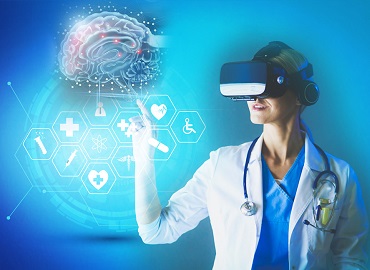
Transforming healthcare with artificial intelligence
By Ana Salom-Boira
Each year, cardiovascular diseases weigh heavily on global healthcare systems, contributing to millions of premature fatalities. As the leading cause of mortality and morbidity worldwide, innovative approaches to cardiology are needed to improve care outcomes and reduce the cost on healthcare providers.
The advent of AI brings forth a disruptive technology with enormous potential to reshape the future of cardiology. Through leveraging AI’s analytical capabilities, tapping into the potential of the internet of medical things (IoMT), and deploying intelligent agents, significant advancements can be made in relation to patient outcomes, clinical investigations and access to care.
In the latest episode of Tech Beyond the Hype, I spoke to digital transformation and strategy leader Richard Dasselaar about the potential of AI to transform patient care in cardiology. Listen to the full interview using the player above.
Empowering cardiologists with deep analytics
The diagnosis and treatment of cardiovascular disease (CVD) are complex processes that require meticulous analysis of vast amounts of patient data. AI-powered deep analytics algorithms can revolutionize these processes, allowing cardiologists to make more accurate and timely decisions. Dasselaar argues that the value of this is two-fold: reducing pressure for healthcare professionals and alleviating the anxiety of awaiting results for CVD patients.
By sifting through electronic health records, genetic profiles, imaging data and wearable device metrics, AI algorithms uncover hidden patterns, predict risk factors and help design more personalized treatment plans. This deep analysis significantly enhances cardiologists’ diagnostic capabilities, leading to more precise interventions, reduced misdiagnoses and ultimately improving care outcomes for patients.
Democratizing access to advanced care
One of the most transformative aspects of AI in cardiology is its potential to democratize access to specialized care. Traditionally, access to top-tier cardiology expertise has been limited to centralized urban centers, leaving patients in remote areas underserved. AI-powered intelligent agents bridge this gap by acting as virtual cardiology experts. These agents, supported by machine learning algorithms and natural language processing, can assist general practitioners and physicians in diagnosing and managing cardiovascular conditions.
By providing real-time guidance, these intelligent agents could empower healthcare providers in remote areas to deliver high-quality cardiology care, reducing geographical disparities in access to expertise. In the interview, Dasselaar suggests that the global healthcare ecosystem needs to be reimagined for these systems to be accessible across the globe.
Revolutionizing care with IoMT
The internet of medical things is a network of interconnected medical devices and systems that collect and transmit patient data in real time. In cardiology, IoMT plays a vital role in monitoring patient vitals, detecting anomalies and facilitating early intervention. AI algorithms can leverage this wealth of data to predict and prevent adverse cardiac events, such as arrhythmias or heart failure, by continuously analyzing vital signs, electrocardiograms and other relevant data. Through the fusion of AI and IoMT, cardiology care can be transformed into a proactive and preventive model, leading to reduced hospitalizations, improved patient outcomes and cost savings for healthcare systems.
Disrupting conventional care models
AI-powered intelligent agents are disrupting the traditional model of cardiology care, allowing for continuous monitoring of patient vitals, providing personalized recommendations to those at risk and offering out-of-hospital support and education. These agents, integrated into mobile health applications or wearable devices, can monitor lifestyle factors, symptom progression and the consistent use of prescribed medications.
By analyzing this data, intelligent agents can offer personalized insights, promoting healthy behaviors and providing timely reminders for medication or lifestyle adjustments. This proactive approach improves patient engagement, self-management and adherence to treatment plans, ultimately reducing the risk of cardiovascular complications and improving long-term outcomes.
Conclusion
The integration of artificial intelligence in cardiology heralds a new era of democratized access to advanced care, improved outcomes and reduced premature deaths caused by cardiovascular diseases. AI’s deep analytics capabilities, combined with IoMT and intelligent agents, revolutionize the field by enabling personalized treatment plans, bridging geographical gaps and empowering both healthcare providers and patients.
As AI’s applications in cardiology continue to progress, the potential to transform care delivery, prevent premature deaths and enhance patient outcomes is huge. By embracing these disruptive technologies and reimagining healthcare ecosystems at a global level, the industry can make strides toward eliminating the burden of CVD.
Listen to the latest episode of Tech Beyond the Hype with Richard Dasselaar to learn more about the impact of artificial intelligence on the future of cardiology and the challenges involved in distributing and democratizing access to advances in AI across the globe.
https://www.techtarget.com/whatis/podcast/Transforming-healthcare-with-artificial-intelligence
