


Emerging trends in AI, Blockchain, IoT in the education sector
By Preeti Dewan
The pandemic acted as a significant trial for the education sector, prompting it to adopt new technologies, addressing issues like limited access to quality education, resource scarcity, administrative burdens and insufficient upskilling opportunities for students, ultimately integrating technology as a key solution. The convergence of AI, Blockchain, and IoT has transformed traditional learning systems globally. Educational institutions now leverage these technologies to create innovative, high-tech teaching and learning platforms.
According to a study by Holon IQ cited across industry platforms like the World Economic Forum, the global education sector will see expenditure of $10 trillion over the next decade. This is because from the streamlining of admission processes, to providing interactive learning resources, AI, Blockchain and IoT have a distinct role to play in the overall education value-chain. While AI can allow creation of personalised curriculums catering to each students’ capabilities and skills, Blockchain can play a vital role in enhancing data security and decentralising learning platforms and IoT can increase interactivity and feedback.
Here are some of the key challenges addressed by new-age technology for Education 4.0:
AI – Revolutionising the education space
The education ecosystem has long struggled with a lack of personalised learning. Without technological advancements, educators found it challenging to identify individual student strengths and weaknesses. AI now addresses this with personalised learning modules and quality education access, enabling both educators and students to upskill effectively. This is why, as per a report by Industry Research Biz, the global AI in education market is projected to grow from US$ 1306 million to US$ 3165 million by 2031 with a 12.7% CAGR.
Personalised Learning
Personalised Learning has been one of the key factors for high-tech education systems and AI has played a vital role in enabling that. Intelligent tutoring systems, powered by AI, can assess a student’s strengths and weaknesses, providing customised resources and feedback. This tailored approach helps in addressing diverse learning styles and paces.
Automation of Administrative Tasks
From automation of the tasks such as grading, scheduling and student enrolments to allowing educators to create interactive modules for the students, AI has streamlined the overall functioning of an educational institution. AI-driven chatbots are also enhancing communication between students and administrative staff.
Advanced Data Analytics
In the tech sector, AI is used for advanced data analytics, enabling informed business decisions. Predictive analytics and machine learning analyse large datasets to identify trends, optimise operations, and forecast outcomes, essential for strategic planning and competitive advantage. Programs like B.Tech in Data Science, AI, and Machine Learning expose students to real-life applications, promoting practical and analytical thinking.
Blockchain – Enhanced security and data verification
Educational institutions have been prone to issues related to data privacy, cybersecurity threats etc. Especially in today’s era of high-tech education, securing online learning environment has become necessary like never before.
Securing Credential Verification
Blockchain has enabled a secure and immutable verification of academic credentials. It enables easy verification of employers, digital diplomas and certificates etc. eliminating the risk of any kind of fraud and overall streamlining the hiring process. With such transparency educational institutions can ensure the authenticity of educational achievements
Enhanced Data Security
Blockchain is enhancing data security by providing decentralised and tamper-proof records. This is particularly important for protecting sensitive information and preventing cyberattacks. Blockchain’s transparent and immutable nature ensures that data integrity is maintained.
Decentralised Learning Platforms
One of the major benefits of Blockchain is the overall decentralisation of learning platforms, where learners and educators can interact directly without intermediaries. Smart contracts enable the automatic execution of agreements, such as course completion and certification issuance, fostering trust and efficiency in the education ecosystem.
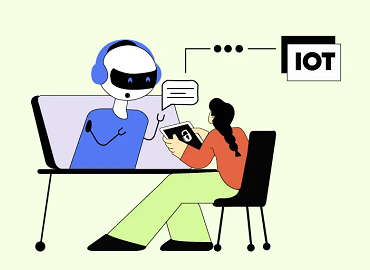
IoT – Enabling smart classroom technology with enhanced learning
For decades, traditional classrooms relied on fixed layouts and lecture-based instruction, resulting in limited technology use, interactivity, and delayed feedback. In contrast, IoT enables real-time feedback, enhanced interactions through multimedia, and flexible teaching methods and classroom layouts to support various learning activities.
Smart Classrooms
Gone are days of traditional classrooms where students and educators operated on a one-line learning methodology. Today, IoT is enabling smart classrooms that equipped with several connected devices and sensors to offer a more integrated education experience. These devices can monitor environmental conditions, manage energy usage, and provide real-time data on student engagement and attendance.
Enhanced Learning Tools
IoT-enabled devices, such as smartboards and wearable tech, are enhancing learning experiences. These tools can provide immediate feedback, track student progress, and enable hands-on learning. In the tech sector, IoT devices are being used to gather data for analysis, improving product development and user experiences.
https://cxotoday.com/specials/emerging-trends-in-ai-blockchain-iot-in-the-education-sector/a>
