


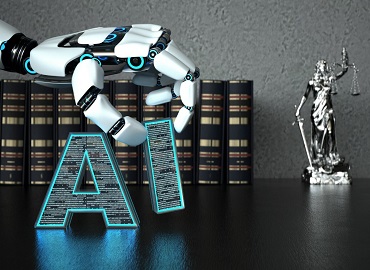
What is Artificial intelligence? Why is it important or not?
By Rohan Gupta
Introduction to AI
A. Definition of AI:Artificial Intelligence (AI) refers lower back to the simulation of human Genius in machines that are trained to assume and mimic human actions.
This consists of responsibilities inclusive of getting to be aware of problem-solving perception, and language know-how.
B. Brief information of AI enchancmenhancementas a rooted relationship once more to historical times, however modern-day AI improvement began in the 1950s. Key milestones consist of the Turing Test, professional structure, and the appearance of gadget gettigadgetscd algorithms.
C. Importance and relevance of AI in the latest society: AI has come to be more and more martial in diverse sectors, consisting of healthcare, finance, transportation, and entertainment.
Its ability to automate responsibilities, decorte decision-making, and electricity innovation makes it a necessary technology for the dest.
Types of AI
A. Narrow AI (Weak AI):
Narrow AI is designed for a unique venture or set of responsibilities. Examples consist of digital assistants like Siri and recommendation buildings like the ones utilized by way of streaming platforms.
Two applications are widespread, starting from consumer aid chatbots to fraud detection buildings in banking.
B. General AI (Strong AI):
General AI refers to AI buildings that are personal human-like Genius and can information, get, and adapt to achieving general AI poses huge challenges, consisting of knowledge, national consciousness, and moral concerns surrounding AI’s potential impact on society.
Approaches to AI
A. Symbolic AI:
Symbolic AI makes use of suitable judgment and policies to process data and make choices.
It is primarily based on a predefined grasp and regulations encoded resources circumstance unusual occasion of Symbolic AI, in which grasp from human authorities is properly rule notably based definite thee
B. Machine Learning:
Machine Learning algorithms permit PC structures to have a look at from record to make predictions or choices without being explicitly programmed.
Supervised, unsupervised, and reinforcement to recognize are the precept classes of Machine Learning algorithms, tonalvidualonal ons hoodamethodhod
Deep Learning:
Deep Learning is a subset of Machine Learning that makes use of artificial neural networks with more than one layer to tolayerct high- high-stages from uncooked archives
Two convolutional NeunNetworksNs) and Recurrent Neural Networks (RNNs) are famous architectures of inner Deep Learning, greatly utilized in picture recognition, natural language processing, and one-of-a-kind domains.
Applications of AI
A. Healthcare: AI is used for scientific graphic analysis, ailment diagnosis, drug discovery, personalized remedy plans, and affected character monitoring.
B. Finance: AI is implemented in algorithmic trading, fraud detection, risk assessment, client aid, and customized monetary advice.
C. Transportation: AI powers self self-sustaining, traffic control structures, predictive preservation for motors and infrastructure, and ride-sharing optimization.
D. Education: AI assis penalized time tutoring privately tuin touring buildings, grading and assessment, and academic content material fabric creation.
E. Entertainment: AI is applied in content cloth recommendation, aiming AI opponents, content material introduction (e.g., music, art), and digital assistants in smart devices.
F. Security and Surveillance: AI is employed in facial recognition, anomaly detection, cybersecurity chance analysis, and predictive policing.
Challenges and Future Directions
A. Ethical concern: AI increases moral problems regarding privacy, bias, accountability, and the potential for misuse.
B. Bias and fairness: AI structures can inherit biases from score-dominant unfair consequences and discrimination.
C. Unemployment and manner displacement: AI automation would possibly also moreover motivate requiring agitating retraining and training initiatives.
D. Regulation and policy: There is a desire for insurance policies to manipulate the ethical use of AI and make positive transparency, accountability, and safety.
E. Technological upgrades and capacity breakthroughs: Future guidelines consist of upgrades in AI algorithms, hardware, explainability, and the aggregate of AI with extraordinary rising science inclusive of robotics and quantum computing.
Conclusion
A. Recap of key points: AI encompasses various technologies geared toward simulating human talent in machines.
B. Implications of AI on society and individuals: AI has profound implications for society, affecting jobs, privacy, healthcare, and lots of specific companies and potential.
C. Enhancements in AI technology: Despite challenges, AI continues rapidly, with the capacity to revolutionize industries, clear up tricky problems, and decorate human well-being. Continued research, moral worries, and collaboration will structure the destiny of AI.
