


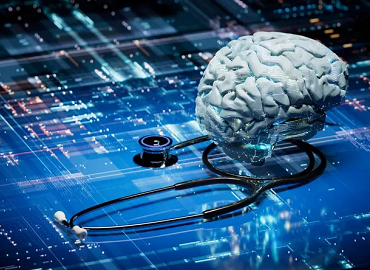
AI Development Isn’t the Future—It’s Already Here
by Aarti Jangid
For decades, artificial intelligence was treated as a distant promise—something reserved for sci-fi movies, research labs, and futuristic predictions. Today, that narrative has completely changed. AI development is no longer about what might happen someday; it’s about what is happening right now, often quietly, behind the apps, platforms, and services we use every day.
From the way we shop and travel to how businesses make decisions and communicate with customers, AI has embedded itself into modern life. It’s not replacing the world overnight, but it is steadily reshaping how the world works.
AI Is Already Part of Daily Life
Most people interact with AI dozens of times a day without even realizing it. Recommendation engines on streaming platforms, personalized ads, voice assistants, navigation apps, spam filters, fraud detection systems, and search engines all rely on AI models trained on massive amounts of data.
What makes modern AI different from earlier automation is its ability to learn, adapt, and improve. Instead of following fixed rules, today’s AI systems analyze patterns, understand context, and make predictions. This shift from rule-based systems to learning-based intelligence is what has accelerated adoption across industries.
AI is no longer a “nice-to-have” innovation. It’s becoming infrastructure.
Businesses Are Moving From Experimentation to Dependence
In the early days, companies experimented with AI to gain a competitive edge. In 2026, many organizations now depend on it to operate efficiently. AI helps businesses forecast demand, optimize supply chains, personalize user experiences, and automate repetitive tasks that once consumed hours of human effort.
Customer service teams use AI to handle high volumes of queries. Marketing teams rely on AI for audience segmentation and campaign optimization. Finance departments use predictive models to assess risk and detect anomalies. Healthcare providers apply AI to diagnostics, scheduling, and patient monitoring.
This widespread adoption has created demand for expertise—not just in using AI tools, but in building intelligent systems from the ground up. That’s where a trusted AI Development Company becomes essential, helping organizations design solutions that align with real-world goals rather than generic automation.
AI Is Changing How We Work, Not Just What We Do
One of the biggest misconceptions about AI is that it simply replaces human jobs. In reality, AI is more often changing how work gets done. Instead of eliminating roles entirely, AI shifts humans toward higher-value tasks—strategy, creativity, decision-making, and problem-solving.
For example, AI can analyze thousands of documents in seconds, but humans still interpret the results and decide what actions to take. AI can draft content, but humans refine tone, context, and intent. AI can flag patterns, but humans provide judgment.
This collaboration between humans and machines is becoming the dominant model. The future of work isn’t human versus AI—it’s human with AI.
Smarter Technology, Bigger Responsibility
As AI becomes more powerful, questions around ethics, privacy, bias, and transparency grow more urgent. Algorithms influence hiring decisions, credit approvals, content visibility, and even legal outcomes. When AI systems are poorly designed or trained on biased data, they can amplify existing inequalities.
That’s why responsible AI development matters. Modern AI systems must be explainable, secure, and aligned with ethical standards. Organizations are increasingly aware that trust is just as important as innovation.
Governments and regulatory bodies are also stepping in, introducing frameworks to ensure AI is used responsibly. In response, developers are focusing on fairness, accountability, and human oversight as core design principles rather than afterthoughts.
AI Across Industries: A Quiet Revolution
AI’s impact isn’t limited to tech companies. Traditional industries are undergoing quiet revolutions powered by intelligent systems:
- Healthcare: AI assists with diagnostics, drug discovery, patient monitoring, and administrative efficiency.
- Retail: Personalized recommendations, inventory forecasting, and dynamic pricing improve both customer experience and profitability.
- Finance: Fraud detection, algorithmic trading, and risk assessment operate at speeds impossible for humans alone.
- Education: Adaptive learning platforms tailor content to individual students’ needs.
- Transportation: AI powers route optimization, predictive maintenance, and autonomous vehicle research.
In each case, AI doesn’t replace the industry—it enhances it.
The Shift From Tools to Systems
Early AI adoption focused on isolated tools: a chatbot here, an analytics dashboard there. Today, AI is evolving into interconnected systems that influence entire business ecosystems. These systems integrate data from multiple sources, learn continuously, and adapt in real time.
This shift requires a deeper level of technical planning and long-term thinking. AI solutions must scale, integrate with existing infrastructure, and evolve alongside changing business needs. The focus has moved from “Can we use AI?” to “How do we build AI that grows with us?”
Creativity in the Age of AI
One of the most surprising developments in AI has been its role in creative fields. AI now assists with writing, music composition, design, video editing, and art generation. Rather than replacing creativity, it acts as a catalyst—helping creators explore ideas faster and iterate more freely.
The creative process is becoming more collaborative, with humans guiding vision and AI handling execution or variation. This partnership is opening doors for individuals and small teams to produce work that once required massive resources.
Conclusion: AI Is Already Reshaping Tomorrow
AI development isn’t waiting for the future—it’s actively shaping the present. The technology has moved beyond hype into practical, everyday impact, transforming how businesses operate and how people interact with the digital world. As AI systems become more intelligent, ethical, and integrated, the organizations that embrace them thoughtfully will lead the next era of innovation.
Whether it’s automation, personalization, analytics, or conversational interfaces, AI is now a foundational layer of modern technology. Investing in the right strategy, talent, and tools—including scalable Chatbot App Development Services—will define how successfully individuals and businesses navigate this intelligent, rapidly evolving landscape.
https://community.nasscom.in/communities/mobile-web-development/ai-development-isnt-future-its-already-here>
