


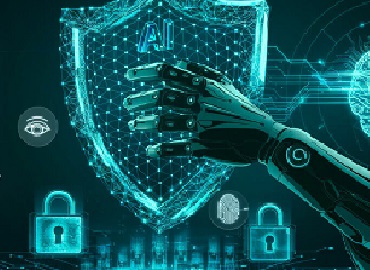
Artificial Intelligence and the Future of Human Rights
by Fiazur Rehman
Introduction
From facial recognition systems and predictive policing to automated hiring and social media algorithms, AI has quietly become a powerful force influencing human rights across the globe.
The critical question is no longer whether AI will affect human rights, but how deeply and in whose favor.
Understanding AI Through a Human Rights Lens
Human rights, as enshrined in the Universal Declaration of Human Rights (1948), are based on principles of dignity, equality, freedom, and justice.
AI systems, however, operate on data, probability, and automation often without transparency or accountability.
Key concerns arise when:
- Decisions affecting human lives are delegated to opaque algorithms;
- Data reflects existing social, racial, or gender biases;
- Powerful technologies are controlled by a few states or corporations.
Potential Threats AI Poses to Human Rights
1. Right to Privacy and Surveillance
AI-powered surveillance technologies such as facial recognition and mass data tracking pose serious risks to privacy.
- Governments increasingly use AI for public surveillance and social monitoring;
- Citizens often lack consent or legal remedies;
- Vulnerable groups are disproportionately targeted.
The UN Special Rapporteur on Privacy has warned that unchecked AI surveillance can lead to a “permanent state of mass monitoring.”
2. Discrimination and Algorithmic Bias
AI systems learn from historical data. If that data is biased, AI reproduces and amplifies discrimination.
Examples include:
- Racial bias in predictive policing tools;
- Gender bias in automated recruitment systems;
- Economic exclusion through AI-driven credit scoring.
UNESCO’s Recommendation on the Ethics of Artificial Intelligence (2021) explicitly highlights the risk of algorithmic discrimination against women, minorities, and marginalized communities.
3. Freedom of Expression and Information
Social media algorithms decide what people see, read, and engage with.
- AI-driven content moderation may suppress legitimate political or religious speech;
- Disinformation campaigns are enhanced through AI-generated content;
- Voices from the Global South are often deprioritized by algorithmic logic.
This directly impacts freedom of expression, a cornerstone of democratic societies.
4. Right to Work and Economic Justice
Automation powered by AI threatens traditional employment structures.
- Low-skilled and routine jobs are most vulnerable;
- Developing countries face higher risks due to weak social protection;
- Economic inequality may widen between AI-rich and AI-poor societies.
The International Labour Organization (ILO) emphasizes the need for a “human-centered approach” to AI in the workplace.
How AI Can Strengthen Human Rights
Despite these risks, AI also holds transformative potential when guided by ethical and legal safeguards.
Positive applications include:
- AI-assisted identification of human trafficking networks;
- Predictive tools for humanitarian response and disaster relief;
- Enhanced access to healthcare and education in remote regions;
- AI-based monitoring of human rights violations using satellite imagery.
Global Efforts to Regulate AI Ethically
Several international initiatives are shaping the global governance of AI:
- UNESCO’s AI Ethics Framework (2021);
- EU Artificial Intelligence Act focusing on risk-based regulation;
- OHCHR’s Human Rights and AI guidance;
- Calls for a global AI governance mechanism similar to climate frameworks.
These efforts signal a growing consensus: AI must serve humanity, not control it.
The Way Forward: A Human-Centered AI Future
To protect human rights in the age of AI, the following principles are essential:
- Human oversight in all high-risk AI decisions;
- Transparency and explainability of algorithms;
- Accountability mechanisms for states and corporations;
- Inclusive data practices that reflect diverse societies;
- Global cooperation, especially involving the Global South.
As emphasized by the UN Secretary-General, “Artificial intelligence must be aligned with human rights and human values.”
Conclusion
Artificial Intelligence is not inherently good or evil, it reflects the values of those who design and deploy it.
The future of human rights in an AI-driven world will depend on political will, ethical leadership, and informed public debate.
The real challenge is not technological. It is moral, legal, and deeply human.
https://medium.com/@fiazsh2/artificial-intelligence-and-the-future-of-human-rights-3936f6df6539>
