


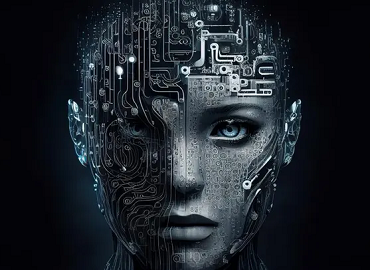
Exploring the Synergy of AI and ML: A Glimpse into the Future of Intelligent Technology
By Michał Rogucki
In the panoramic landscape of modern technology, artificial intelligence (AI) and machine learning (ML) stand out as twin colossi, shaping the future with their vast potential. Together, they form a synergistic relationship that underpins advancements across myriad domains – from healthcare and finance to autonomous vehicles and beyond. This article seeks to delve into this confluence and offer a perspective that paints a picture of their intertwined future, relaxing the grip of overused rhetoric to reveal the essence of this technological dance.
AI and ML have permeated public consciousness to such an extent that the two terms are often used interchangeably, yet they are distinct. AI is a broad concept that refers to machines or systems’ ability to perform tasks that typically require human intelligence. This includes reasoning, speech recognition, and visual perception. Machine learning, on the other hand, is a subset of AI, focused on the idea that systems can learn from data, identify patterns, and make decisions with minimal human intervention.
While AI and ML’s benefits and potential risks are topics of vigorous debate, there is no denying that their symbiosis presents an evolution in computational capability. Here are some nuanced reflections on this union:
- AI and ML are not just about automation; they are about augmentation. They enhance human capabilities by assuming routine or computationally intensive tasks, freeing humans to engage in more creative and strategic activities.
- The ethics of AI and ML are as imperative as their technological progress. As these systems become more integral to society, issues of bias, privacy, and accountability become more acute and necessitate forward-thinking governance.
- The evolution of AI and ML is an iterative tale. With each breakthrough comes a new set of challenges and opportunities, and the journey is as important as the destination.
These reflections lay the groundwork for considering the potentially transformative effects of AI and ML in the forthcoming decade.
The interaction between AI and ML has propelled innovations such as deep learning, where neural networks — inspired by the structure of the human brain — learn from large amounts of data. Such systems have achieved remarkable successes, including mastery over complex games like Go and poker, and are pushing the boundaries of what machines can do.
However, looking ahead, we see an AI and ML landscape that promises even greater integration with daily life. Personalized medicine, where treatments are tailored to the genetic makeup of individuals, becomes more viable through AI-driven data analysis. Autonomous vehicles become safer and more efficient as ML algorithms learn from vast amounts of driving data. In finance, AI-powered algorithms assist in detecting fraudulent activities and managing investments more effectively.
Yet, this brave new world of AI and ML is not without its challenges. The ‘black box’ nature of certain AI decision-making processes can make it difficult to understand how certain conclusions are reached. Privacy concerns are heightened as data becomes the lifeblood of the AI/ML ecosystem. Regulations and ethical frameworks strive to keep pace with technological advancements, often lagging behind the curve.
In addressing these issues, the field of AI and ML presents a fertile ground for interdisciplinary collaboration. Ethicists, sociologists, legal experts, and technologists are coming together to ensure that as AI and ML continue to evolve, they do so in a manner that aligns with societal values.
As we consider the future, one notion holds true: the confluence of AI and ML is not a distant marvel but an unfolding reality, and the complexity of this reality demands a multifaceted engagement from all sectors of society.
FAQs about AI and ML
What is the difference between AI and ML?
AI is the broader concept of machines being able to carry out tasks in a way that we would consider “smart” or intelligent. ML is a current application of AI based around the idea that we should be able to give machines access to data and let them learn for themselves.
What are some practical applications of AI and ML?
AI and ML applications are diverse, including virtual personal assistants, video game AI, autonomous vehicles, fraud detection, personalized recommendations, predictive maintenance, and advanced healthcare diagnostics, among others.
How do AI and ML relate to data privacy?
AI and ML algorithms often require large amounts of data to learn and make informed decisions. This raises concerns about how this data is collected, stored, used, and protected. Data privacy regulations, like GDPR and CCPA, are designed to ensure users’ personal data is handled responsibly.
Are there any ethical concerns associated with AI and ML?
Yes, ethical concerns include data biases leading to discrimination, job displacement due to automation, privacy invasion through surveillance, and accountability for decisions made by AI systems.
Is it possible for AI to become too intelligent?
This topic, often referred to as the singularity, is speculative and concerns the hypothetical future point at which AI surpasses human intelligence. Ensuring AI development is aligned with human values is critical to addressing these concerns.
By considering these questions and staying informed, we can collectively navigate the AI and ML landscape with insight and prudence.
For those seeking further information on the ethical and technical underpinnings of AI and ML technology, reputable sources include academic journals, technology think tanks, and organizations specializing in AI research and ethics, such as those with domains like ‘ai.stanford.edu’, ‘deeplearning.ai’, or ‘futureoflife.org’.
https://ts2.space/en/exploring-the-synergy-of-ai-and-ml-a-glimpse-into-the-future-of-intelligent-technology/#gsc.tab=0
